(Full transcript after the jump)
Showing posts with label prayer. Show all posts
Showing posts with label prayer. Show all posts
Friday, May 24, 2019
The Story about the Baby Sharks
I told a story about the ritual of counting the omer at Shabbat Services for Temple Emanu-El. It is based on a famous one about starfish that I learned as a kid in CRaFTY (the NYC region of NFTY, the Reform Jewish youth movement).
(Full transcript after the jump)
(Full transcript after the jump)


Wednesday, February 27, 2019
The Story of the Rabbi's Daughter
Here's me telling a story based on the classic tale about the Seer of Lublin, who as a child would go to the forest to pray. God is the same everywhere, but we are not. Enjoy!
(Full Transcript after the jump)
Thursday, November 22, 2018
The Story of Honi and the Carob Tree
Here's me telling the story of Honi and the Carob Tree at Temple Emanu-El last Friday night... a classic tale of miracles, transgenerational ethics, and chocolate substitutes. Enjoy!
(Full Transcript after the jump)
n.b. Unfortunate drumming noise was apparently caused by a steam pipe; while it was broadcast loudly on the livestream we couldn't hear it during the service itself.
Tuesday, September 23, 2014
Why do we bless our bread? (Part IV)
Tomorrow evening we enter into the sabbatical or shmita year, and so once again I share with you a section from my master's thesis on Birkat Ha-Mazon, the grace after meals. In my three previous posts, I discussed the significance of sanctifying the act of eating, how saying this blessings can help us think about proper nutrition and a healthy diet, and how we should always relate to our food as a Divine gift.
This week, as is only fitting in the days after the world's largest climate-change protest here in NYC, I discuss how saying this blessings can help us to confront our increased alienation from the sources of our food. The thesis in its entirety can be found online at the Lookstein Center for Jewish Education.
This week, as is only fitting in the days after the world's largest climate-change protest here in NYC, I discuss how saying this blessings can help us to confront our increased alienation from the sources of our food. The thesis in its entirety can be found online at the Lookstein Center for Jewish Education.
Birkat Ha-Mazon is an opportunity to examine where our food comes from, how it is grown and raised, how it is packaged and transported to us, and how it is prepared. In the modern era, most city-dwellers have lost touch with the sources of origin of their food. This is evident in the description of the world in Goldberger’s How to Thank HaShem for Food: “The earth is the most ancient and the most modern food-factory which was created and is constantly maintained by the Master of the Universe” (p. 21). We have become so alienated from the processes of farming and harvesting that in order to provide an analogy that makes sense to the contemporary reader, Goldberger describes the workings of the world in terms of a factory, the strongest symbol of industrialization and the human domination of the planet one could find!References
Arthur Waskow analyzes the problem, asking whether “in our own time of earthquake both in the world and for the Jewish people . . . we need to rethink how to make food sacred as deeply as our ancestors did? For them, food was no longer what they grew in a small land by dint of their own labors, but what came to them by ship and camel train. For us, food has more and more become what is manufactured, not just grown: It comes from crossbred and genetically engineered plants and animals; it comes with inserted vitamins; it comes heavily packaged, precooked, frozen, irradiated, invented” (p. 68). Dr. Steven M. Brown asserts the value that Birkat Ha-Mazon can have in responding to this situation, for each time we say a blessing we acknowledge God and the chain of events (human or otherwise) that enabled us to have the gift of food in front of us.
Even when the Israelites experienced the miracle of manna falling from the sky, they still were obligated to collect it every morning, for it would rot if kept overnight (Exodus 16:21). The lesson here seems to be that our sustenance is the result of a partnership between God and human beings. Food is a miracle, but human effort plays a critical role in planting, raising, harvesting, and preparing the food we eat. Ultimately, God is the source of all of our nourishment, but we must also be aware of the humans (such as the farmers, the truckers, and the cooks) which brought the food to our mouths.
Goldberger, Moshe. How to thank Hashem for Food: Lessons from Birkas Ha-Mazon. New York: Gross Books, 1988.
Waskow, Arthur. Down-to-Earth Judaism: Food, Money, Sex, and the Rest of Life. New York: William Morrow and Company, 1995.
Tuesday, September 16, 2014
Why do we bless our bread? (Part III)
Before I share with you this third gleaning from my master's thesis, I want to mention that my brilliant (and pedantic) friend Ori correctly observes that the title of this series is poorly worded, as we do not actually bless our bread. Rather, when we say a blessing we are blessing God, or rather, we are blessing God's ineffable name.
This is, of course, a critical difference. If you arrive late to Shabbat dinner, you are still required to make the blessings over the challah before you start eating. This is because, when we say a blessing over food, the food itself is in no way changed. What was previously an ordinary piece of bread is not made sacred (as is, for example, believed by many Christians to be the case for the communion wafer). Rather, it is our relationship to our food that is altered and made sacred, as is described in more detail in this excerpt. My thesis in its entirety can be found online at the Lookstein Center for Jewish Education. The full text of this section is after the jump.
This is, of course, a critical difference. If you arrive late to Shabbat dinner, you are still required to make the blessings over the challah before you start eating. This is because, when we say a blessing over food, the food itself is in no way changed. What was previously an ordinary piece of bread is not made sacred (as is, for example, believed by many Christians to be the case for the communion wafer). Rather, it is our relationship to our food that is altered and made sacred, as is described in more detail in this excerpt. My thesis in its entirety can be found online at the Lookstein Center for Jewish Education. The full text of this section is after the jump.
According to tradition, Birkat Ha-Mazon was instituted by Moses at the time when the manna miraculously descended to feed the Israelites during their travels in the Sinai desert (Talmud Berachot 48b). Elie Munk, quoting S. R. Hirsch, writes that by connecting Birkat Ha-Mazon to the manna, the rabbis teach us that “every piece of bread eaten now is as much a gift from God as the manna was.” (1954, p. 211). Goldberger, drawing from Talmud Pesachim 118a, asserts that the process by which God “causes a seed to transform earth into food [is] as spectacular as the miracle of the splitting of the sea” (1988, p. 5).
The point of each of these statements is that food is always gift from God, a gift which cannot be taken for granted. The provision of food is a daily miracle, whether it is effortlessly picked from the trees (as in the Garden of Eden) or reaped from the earth through great effort (after leaving the Garden). “The message appears rather clear: When we thank God for giving us food, we are recognizing that there is no intrinsic difference between the manna and the livelihood one wrests from the earth through sweat and hard toil; both are gifts from heaven” (1984, p. 182).
This connection is also made in the blessing said prior to eating bread, “Ha-Motzi.” This blessing thanks God “who brings forth bread from the land.” Bread – not wheat, which would be more technically accurate – to affirm God’s centrality to the entire process of making bread, from the sprouting of the grain to its baking in the oven. As Evelyn Garfiel puts it, “finding his daily bread never ceases to be a Nes [miracle] even to the farmer who toils so hard to produce the grain, for he recognizes its ultimate source to be God’s loving care for all His [sic] creatures. It is God ‘Who brings forth [the] bread from the earth’” (1958, p. 122).
Thursday, August 21, 2014
Why do we bless our bread? (Part II)
Continuing to mine my master's thesis on Birkat Ha-Mazon, the grace after meals, as we build up to the shmita year, this week I share with you the section on using the prayer as an opportunity to focus on proper nutrition. I won't overstate the analogy, but I believe that just as saying this prayer can be a time for personal and communal reflection on issues relating to food, diet and nutrition, so too can we look at the coming year as a chance to rethink and renew our approaches to these topics. The thesis in its entirety can be found online at the Lookstein Center for Jewish Education. The full text of this section is after the jump.
The World Health Organization defines "Health" as balance between physical, mental and social being. Birkat Ha-Mazon reminds us of the need to pay attention to, and strike a balance between, each one of these aspects of our health. Birkat Ha-Mazon is a social activity, as it is often said as the conclusion of a communal meal. Focusing on the text can lead to heightened cognitive awareness of, and encounter with, challenging issues affecting Jews and people in general. Here, I wish to look at the role that Birkat Ha-Mazon can play as a focal point in thinking about the physical impact of food on our bodies, or in other words, for nutrition education.
According to Genesis 1:26, humans are created “b’tzelem Elohim,” in the image of God. Although the interpretations of this are manifold, one generally accepted implication is that any form of self-harm violates Jewish law as it is a desecration of the Divine image. The extent to which this principle is applied varies: Some communities forbid body-piercing based on this idea, while others will not smoke cigarettes. Arguably, a concern for proper diet and exercise should be considered a Jewish obligation.
Birkat Ha-Mazon is a mandatory pause at the conclusion of a meal. We can use this time to make a connection between the food we have eaten and the nourishment it has provided us. This is also an opportunity for us to reflect upon the choices we have made with the foods we have eaten. One might ask oneself questions along the lines of: Did I waste food? Did I overeat? Was the food grown (or raised) in a manner that fits with my ethics? How did this food get from its point of origin to me? How did the choices I made affect other people’s lives?
Thursday, August 07, 2014
Why do we bless our bread?
As some of you will recall, my master's thesis as a student at Davidson School of Education (15 years ago!) was on Birkat Ha-Mazon, the grace after meals. As we round the corner into a shmita year, I thought I'd take this opportunity to share with you a section of that work. The thesis in its entirety can be found online at the Lookstein Center for Jewish Education. The full text of this section be found after the jump.
A concern for food appears at the very beginning of the Bible. Sustenance for human beings, and for all creatures, is viewed as an intrinsic component of the Divine plan of creation. In God’s first address to humanity, in the first chapter of Genesis, God instructs the humans that they may eat from every plant on the ground and every fruit of the tree (Gen. 1:29). Shortly thereafter, this is qualified with the prohibition against eating from the tree of knowledge of good and evil (Gen. 2:17). Just as babies receive nourishment while in the womb, in the “perfect” paradise of the Garden of Eden, food is provided for humans without any effort on their part.
When the humans are expelled from Eden, a new stage in their relationship with food begins. Now, God admonishes Adam, only “by the sweat of your brow shall you get bread to eat” (Gen. 3:19). This is the first mention of bread in the Bible, which, in contrast to the fruit of the Garden of Eden, requires human labor. In the next chapter, perhaps in response to the anxiety provoked by the responsibility of providing food for oneself, Cain and Abel bring the first sacrificial offerings to God (Gen. 4:3-4). This offering can be seen as a petition, or as a thanksgiving, for successful harvests and healthy livestock.
Arthur Waskow writes of two ways by which the ancient Israelites sanctified the food they ate, which can be traced back to these first four chapters of Genesis. “One major approach they took to hallowing food was to set some aside as sacred, others as forbidden” (23). The prohibition against eating from the tree of knowledge can be seen as paradigmatic of this approach, later reflected in laws of Kashrut, tithing, fasts, Sabbatical years, and so on. The “other process for hallowing food was to take the products of the land to a single place, the Temple in Jerusalem, there to bring God near to them” (24). The offerings of Cain and Abel are the prototype for sacrificial worship, evinced in stories of Noah (Gen. 8:20), Abraham (Gen. 12:7) and so on, and which ultimately reaches its peak in the unified system of regulated sacrifices at the Temple in Jerusalem.
These two dimensions for the sanctification of food -- that of making distinctions between food which may and may not be eaten and that of consecrating food as an offering to God -- will be discussed in great detail in the upcoming sections. Here, I wish to emphasize that there is a third conception of the sanctification of food. The very act of eating, the turning of physical matter into energy, of the life-force in a plant or animal into one’s own life-force, is in itself a sacred activity.
Wednesday, November 06, 2013
My Full List of Torah Commentaries for Congregation Emanu-El
In my time at Emanu-El,
I have contributed nearly thirty essays to our weekly commentary. These
commentaries are written not only by the clergy and educational staff, but also
our administrators. They vary widely in style, from academic scholarship to
thoughtful homiletics to amusing retellings of the story from the point of view
of one of the minor characters. In my own commentaries, I’ve often written
about the educational programs at Emanu-El and how they attempt to make ancient
wisdom relevant to our lives today.
I’m assembling here (after the jump) the full list of my commentaries, with a
brief excerpt from each one.
This is my absolute favorite thing I’ve written,
from my March 2012
Commentary on Parshat Tzav: “Jeremiah
is not opposed to the pursuit of wisdom, strength or wealth, and neither should
we be. Jeremiah tells us, if you must be driven by ego, then take pride in how
you emulate God in your behavior. Don’t simply attain wisdom for its own sake,
he says. Use your wisdom to bring about kindness. Use your strength in the
pursuit of justice. And with your wealth, seek equity.”
You can subscribe
to receive the weekly Torah commentary by email, and it is also available as an
RSS Feed.
Monday, November 04, 2013
Vision-Driven Institutions: Solomon Schechter School of Manhattan
In 2007, I wrote on this blog about the Heschel Center for Environmental Learning and Leadership in Israel. At the time, I expressed my skepticism about my ability to turn this into a regular feature, but here I am, just six short years later, with a description of another innovative institution, the Solomon Schechter School of Manhattan. I wrote this piece as part of my coursework for the executive doctoral program at the Davidson School of Education. This is not a comprehensive discussion of the institution, but a description of just one element of the program, and the institutional leader who created it.
Dr. Steven Lorch is the founding headmaster of the Solomon Schechter School of Manhattan, a K-8 Jewish Day School on the Upper West Side of Manhattan that is currently in its 18th year. I taught at Schechter Manhattan for three years. I loved its team-teaching approach (every class is led by two teachers, both fluent in Hebrew, who share responsibility for all areas of the curriculum), its constructivist philosophy, and its focus on menschlichkeit [kindness and empathy] as a core component of the institution. Yet, no aspect of my work there has influenced me more thoroughly than the experience of leading daily worship and teaching its tefilah [prayer] curriculum. At both Central Synagogue and Congregation Emanu-El of the City of New York, the two institutions I have served since leaving Schechter Manhattan, I have attempted to adapt the Schechter prayer curriculum to suit the needs of a Reform Jewish supplementary school setting. This sketch focuses solely on this aspect of Dr. Lorch’s work: His role as the creator of the Schechter Manhattan tefilah curriculum.
Dr. Steven Lorch is the founding headmaster of the Solomon Schechter School of Manhattan, a K-8 Jewish Day School on the Upper West Side of Manhattan that is currently in its 18th year. I taught at Schechter Manhattan for three years. I loved its team-teaching approach (every class is led by two teachers, both fluent in Hebrew, who share responsibility for all areas of the curriculum), its constructivist philosophy, and its focus on menschlichkeit [kindness and empathy] as a core component of the institution. Yet, no aspect of my work there has influenced me more thoroughly than the experience of leading daily worship and teaching its tefilah [prayer] curriculum. At both Central Synagogue and Congregation Emanu-El of the City of New York, the two institutions I have served since leaving Schechter Manhattan, I have attempted to adapt the Schechter prayer curriculum to suit the needs of a Reform Jewish supplementary school setting. This sketch focuses solely on this aspect of Dr. Lorch’s work: His role as the creator of the Schechter Manhattan tefilah curriculum.
Saturday, December 15, 2012
Responding to Crisis on the Eighth Night of Chanukah
If,
like I, you are finding yourself speechless after using words like “tragedy,”
“devastation” and “disaster” so many times this fall, you may find some words to say by looking at the Jewish Education Center of Cleveland's “Responding
to Crisis” website.
Some
links you might find particularly useful:
How children respond to crisis
Many
of the quotes in the section “texts
from our tradition” speak to me, but I particularly note one that we have
been teaching our Sunday 3rd-5th graders at Emanu-El:
Who is mighty?
One who conquers his evil impulse.
As it is written,
Those who are slow to anger are better than the mighty,
And those who rule over their spirit than those who conquer a city.
Finally,
many useful links in the resources
section, and I sadly note that this one is helpful to know about right now:
Helping your children manage distress in the aftermath of school shootings
This
being the final evening of Chanukah, I thank all of you reading this for your dedication and
rededication to keeping alive the flames of hope, courage, and faith. At times
like these, I am so proud to belong to a tradition that for thousands of years
has asserted that every human life is sacred and dared us to strive for a more
righteous and more loving society. I know the metaphor of “passing along the
torch” is a tired one, but when you are lighting the Shamash so your kid can
light her menorah . . .
Thanks to Nachama Skolnik Moskowitz for posting a reminder about this resource to the NATE facebook group.
Monday, June 21, 2010
Emanu-El | Weekly Torah Commentary: Balak
I write the Weekly Torah Commentary for the Congregation Emanu-El website about three times a year. This time, I thought it made sense to share it here. Shabbat Shalom.

ach week, we in the Religious School begin our worship services with the students by singing the words from Numbers 24:5, “How good are your tents, Jacob, your dwellings, Israel!” These are the words that traditionally begin morning daily worship, said upon first entering a synagogue. The word “dwellings” might also be translated as “sanctuaries,” and it is fitting that we begin our prayers with words of appreciation for the space in which we will offer our prayers.
In their original context, in this week’s Torah portion, these words are spoken by the prophet Balaam, who has been hired to curse the Israelites by Balak, the king of Moab. Balak has seen the victories of the Israelites against other nations as they have traveled in the desert, and he fears that this soon will be the fate of his own kingdom. But Balaam finds himself only able to offer words of blessing, and it is these words of praise, first spoken by a non-Jew, that now are part of our daily liturgy.
When we teach our students about this prayer, we ask them to offer a compelling explanation for what we could possibly mean when we say the word “Israel” in this prayer. Some say that this prayer is a wish for the well-being of the people who live in Israel today, whether Jewish or not. Others note that the prayer also mentions Jacob and argue that this is a prayer for all of those descended from him — all Jews, everywhere. Still others observe that Jacob’s name was changed to Israel after wrestling with an angel, so this prayer is a reminder that we must grapple with the Divine when we pray.
This prayer has been a sort of “theme song” for our two congregational family trips to Israel, in July 2008 and this past December 2009 – January 2010. Shortly after arriving, we sang these words while standing on a hilltop in Jaffa, looking out on the city of Tel Aviv. I tried to imagine how all of the people living in every apartment complex and villa are trying to make a good and beautiful place for themselves and their families. A few days later, while visiting a mountaintop kibbutz overlooking the Lebanese border, I looked out towards the houses on the other side of the valley separating the two countries. I thought to myself, if only the people living on each side of the border could look to the other and offer words of blessing: How good, how beautiful, is the place where you live.
On our final night in Jerusalem, just before heading to the airport, we again sang these words while looking out at the Old City, divided into four quarters like the four chambers of the human heart. It is to this spot that we turn when we pray, reminding ourselves that the heartbeat of Jerusalem has kept the Jewish people alive throughout the centuries. Yet, here too is where Jesus walked and, some say, was resurrected; where Muhammad is reported to have ascended to heaven; for Christians and for Muslims, as for us, Jerusalem is the beating heart of a people.
We teach our students that there isn’t a single correct answer as to what we mean when we say “Israel” in these words. But I know that for me, I agree with all three of these answers. I am praying for the beautiful homes of the Jews, my people, my own ancestry. I am praying for the good homes of the people living in Israel, whatever their religion may be. And I am grappling with the Divine and wondering when will the time come that enemies will turn to one another and find themselves only able to offer words of blessing.
Balak (June 26, 2010)
Translation: Numbers 24:2-5 (2) As Balaam looked up and saw Israel encamped tribe by tribe, the spirit of God came upon him. (3) Taking up his theme, he said: Word of Balaam son of Beor, Word of the man whose eye is true, (4) Word of him who hears God’s speech, Who beholds visions from the Almighty, Prostrate, but with eyes unveiled: (5) How fair are your tents, O Jacob, Your dwellings, O Israel! Excerpted from The Torah: A Modern Commentary, Revised Edition, editor W. Gunther Plaut (NY: URJ Press, 2005). Used by permission of URJ Press, www.urjbooksandmusic.com. | Original Text:  |
Commentary
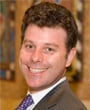 |
Saul Kaiserman, |
In their original context, in this week’s Torah portion, these words are spoken by the prophet Balaam, who has been hired to curse the Israelites by Balak, the king of Moab. Balak has seen the victories of the Israelites against other nations as they have traveled in the desert, and he fears that this soon will be the fate of his own kingdom. But Balaam finds himself only able to offer words of blessing, and it is these words of praise, first spoken by a non-Jew, that now are part of our daily liturgy.
When we teach our students about this prayer, we ask them to offer a compelling explanation for what we could possibly mean when we say the word “Israel” in this prayer. Some say that this prayer is a wish for the well-being of the people who live in Israel today, whether Jewish or not. Others note that the prayer also mentions Jacob and argue that this is a prayer for all of those descended from him — all Jews, everywhere. Still others observe that Jacob’s name was changed to Israel after wrestling with an angel, so this prayer is a reminder that we must grapple with the Divine when we pray.
This prayer has been a sort of “theme song” for our two congregational family trips to Israel, in July 2008 and this past December 2009 – January 2010. Shortly after arriving, we sang these words while standing on a hilltop in Jaffa, looking out on the city of Tel Aviv. I tried to imagine how all of the people living in every apartment complex and villa are trying to make a good and beautiful place for themselves and their families. A few days later, while visiting a mountaintop kibbutz overlooking the Lebanese border, I looked out towards the houses on the other side of the valley separating the two countries. I thought to myself, if only the people living on each side of the border could look to the other and offer words of blessing: How good, how beautiful, is the place where you live.
On our final night in Jerusalem, just before heading to the airport, we again sang these words while looking out at the Old City, divided into four quarters like the four chambers of the human heart. It is to this spot that we turn when we pray, reminding ourselves that the heartbeat of Jerusalem has kept the Jewish people alive throughout the centuries. Yet, here too is where Jesus walked and, some say, was resurrected; where Muhammad is reported to have ascended to heaven; for Christians and for Muslims, as for us, Jerusalem is the beating heart of a people.
We teach our students that there isn’t a single correct answer as to what we mean when we say “Israel” in these words. But I know that for me, I agree with all three of these answers. I am praying for the beautiful homes of the Jews, my people, my own ancestry. I am praying for the good homes of the people living in Israel, whatever their religion may be. And I am grappling with the Divine and wondering when will the time come that enemies will turn to one another and find themselves only able to offer words of blessing.
Wednesday, October 08, 2008
The High Cost of Jewish Life is on Everyone's Mind this Yom Kippur
This just in, from my friend Adam Dershowitz:
Of course, once again, Chabad was there first (well, to be fair, Larry David and HBO probably deserve the credit, but Chabad is making good use of it):
Join Chabad for High Holidays! from JAB MEDIA on Vimeo.
This clever little video, adaptable for the Chabad house near you, is the brainchild of Jewish Abstract Media. Kudos. And G'mar Chatima Tova.
Thursday, February 14, 2008
Being a full-time teacher, from a teacher's perspective
Amy Deutsch, one of the full-time teachers at Central Synagogue in NYC, writes:

"I have a picture that sits on my desk at work. It is of me and two of my coworkers wearing togas and talking animatedly about the Hasmonean revolt. You may wonder what I do for a living. I am a teacher.
"I work in an innovative educational program in New York City that employs religious school teachers on a full-time basis. Before I began my graduate studies, I was one of these teachers. When you are teaching full-time, you have the time to plan and use experiential educational techniques. In fact, we had the time to create a reenactment of the Hasmonean revolt—more often known as the story of Chanukah."The day began in the lobby, where we turned each fourth grader’s bedsheet into a toga. Then the “Greeks” attempted to convince the students of the superiority of Greek culture with an intricate slideshow pressuring them to assimilate. After the Greeks left the room, Judah Maccabee and his warriors arrived and helped the students fight assimilation. At the end of the day, Judah Maccabee and the Greek ruler got in a swordfight (somehow reminiscent of Luke Skywalker and Darth Vader) and it seemed desperate, but ultimately Judah won, as he was strengthened by the students who started chanting the words of the Sh’ma.
"Though I was supposed to stay in character, I found myself incredulous at this moment. 120 fourth grade students were chanting the Sh’ma. Some of them had even added the hand motions we had taught them the year before. They were on their feet, filled with pride and passion for their Judaism. I realized then how blessed I was to help foster the development of Jewish identity in my students. It is a gift to be a teacher—and especially to be a teacher who gets to wear a toga."

Amy Deutsch is a current Wexner Fellow/Davidson Scholar. She is studying for a Master’s Degree in Jewish Education at the William Davidson Graduate School of Jewish Education at the Jewish Theological Seminary.
Friday, May 25, 2007
Job Posting: "Shabbat Leader," Society for the Advancement of Judaism
The SAJ, a Reconstructionist and Conservative synagogue on the Upper West Side, is seeking a "Shabbat leader" to lead family services and to teach in our Hebrew School. Our family services are warm, inviting, and very musical. We use a mix of traditional prayer, storytelling, and interactive educational activities to create a service that is welcoming to all. At the Hebrew School we use an experiential learning approach to introduce children of all ages to the joys of Jewish life. We are looking for an educator who will bring educational engagement and a high level of ruach-oriented fun to our Hebrew school.
The Shabbat leader will:The schedule for the various services should allow for each service to occur on a different week of the month in order to accommodate all family groups.
- Lead two Friday night family services a month, one geared towards younger children (ages 4-8) and their parents, and one geared towards tweens and their parents.
- Lead one monthly Saturday morning service geared towards younger children.
- Teach music in the Hebrew School twice a week, ideally on Sunday and Tuesday. There will be a particular focus on teaching songs from the family Shabbat services, to create a bridge between the Hebrew School and the family services.
- Help plan and attend two havdalah events during the winter.
- Work closely with and be supervised by the education director, meeting with the education director on a weekly basis.
- Attend bimonthly meetings of a lay "Shabbat committee."
The ideal candidate for this position will have at least four years experience in song-leading, have the ability to song-lead while playing either guitar or keyboard, and will also have experience creating and leading family education programs. He or she will be upbeat and outgoing, and will enjoy and relate well to children.
Compensation ranges from $15,000 up, commensurate with experience.
Please email resumes to education.saj@verizon.net or fax (212) 724-0293.
Thursday, May 17, 2007
More winners, and a blog as well!
Yesterday (May 16, 2007) the AVI CHAI Foundation announced the fifteen awardees of their Educational Technology Experimentation Grants (out of around 180 submissions). They comprise "a diverse range of projects with the ultimate goal of learning about and identifying promising educational technology initiatives for Jewish education."
Winning initiatives make use of smartboards, websites, podcasts, and video to teach subjects ranging from Hebrew to Talmud to prayer. All the winners are from day schools - no summer camps, supplementary schools, or other programs are represented.
Perhaps the most interesting aspect of this project is AVI CHAI's use of a weblog by which to follow each grantee’s progress along the experimentation route.
Although it is hard to guess from the terse descriptions presented which of these projects will be the most innovative - and of course, the most creative might not be the most successful - one in particular stood out to me: A project by Rabbi Judd Kruger Levingston at the Saligman Middle School of the Perelman Jewish Day School in Melrose Park, PA:
"Rabbi Levingston will be exerimenting with on-line tefilla; electronic siddurim; podcasts and other new media expressions of prayer by and for the middle school students."
Best of luck to Judd and to the other winners, and let's stay tuned to see how these projects develop!
Thursday, April 12, 2007
Spiritual and Practical: A New Approach to Teaching Prayer

Despite its central role in most supplementary school curricula, guest blogger Lev Metz observes that most students never really develop a meaningful relationship with prayer or even learn the liturgy. He blames the widespread approach in which "some formal instruction is given on how to participate in specific prayers, but no concerted effort is made to acculturate the students to a community that prays with intention."
He suggests an alternative approach in which "the service itself can become the major vehicle for teaching about the service, with supplementary classroom components facilitated both before and after the service."
"The character and nature of the services themselves should be dynamic, changing regularly and intentionally focusing on a particular prayer or theme that parallels what is being taught in the classroom. These themes could be determined according to the community’s values (via the Religious School Committee or its equivalent), which will both challenge the community to articulate its values alongside the clergy as well as help to bring a widespread buy-in for the program among community members.
"Acculturating students to the tefillah [prayer] experience will require a dynamic balance between instruction on how Jews pray . . . and an exploration of why we do so. It is our responsibility to show our students the possibilities that tefillah can provide for them. Spiritually, tefillah can provide a ballast to balance out such pervasive American cultural norms as materialism and narcissism. Educationally, tefillah provides a lens and window through which we can connect to Jews around the world - past, present and future."
The complete article is available here as a Microsoft Word file.
Lev Metz is a graduate student at the Rhea Hirsch School of Education at Hebrew Union College in Los Angeles.
Sunday, September 17, 2006
Extreme Shul Makeover!
The JTA has posted seven articles on the movement towards independent minyanim, alternative synagogue models, and other experiments in community and prayer.For a shul to prosper it must become more than a glorified bar mitzvah factory. To energize members and attract new ones, synagogues are turning to the personal trainers of the Jewish world, congregational makeover programs that aspire to help synagogues be all they can be. How successful are they?
The site is part of a huge discussion about new forms of prayer community being held across the Jewish blogsphere - for example, see this posting at on the question of the future role of rabbis in light of the independent minyanim movement, or this one at Mah Rabu on the "trichitza" model for pluralistic prayer.
Subscribe to:
Posts (Atom)